
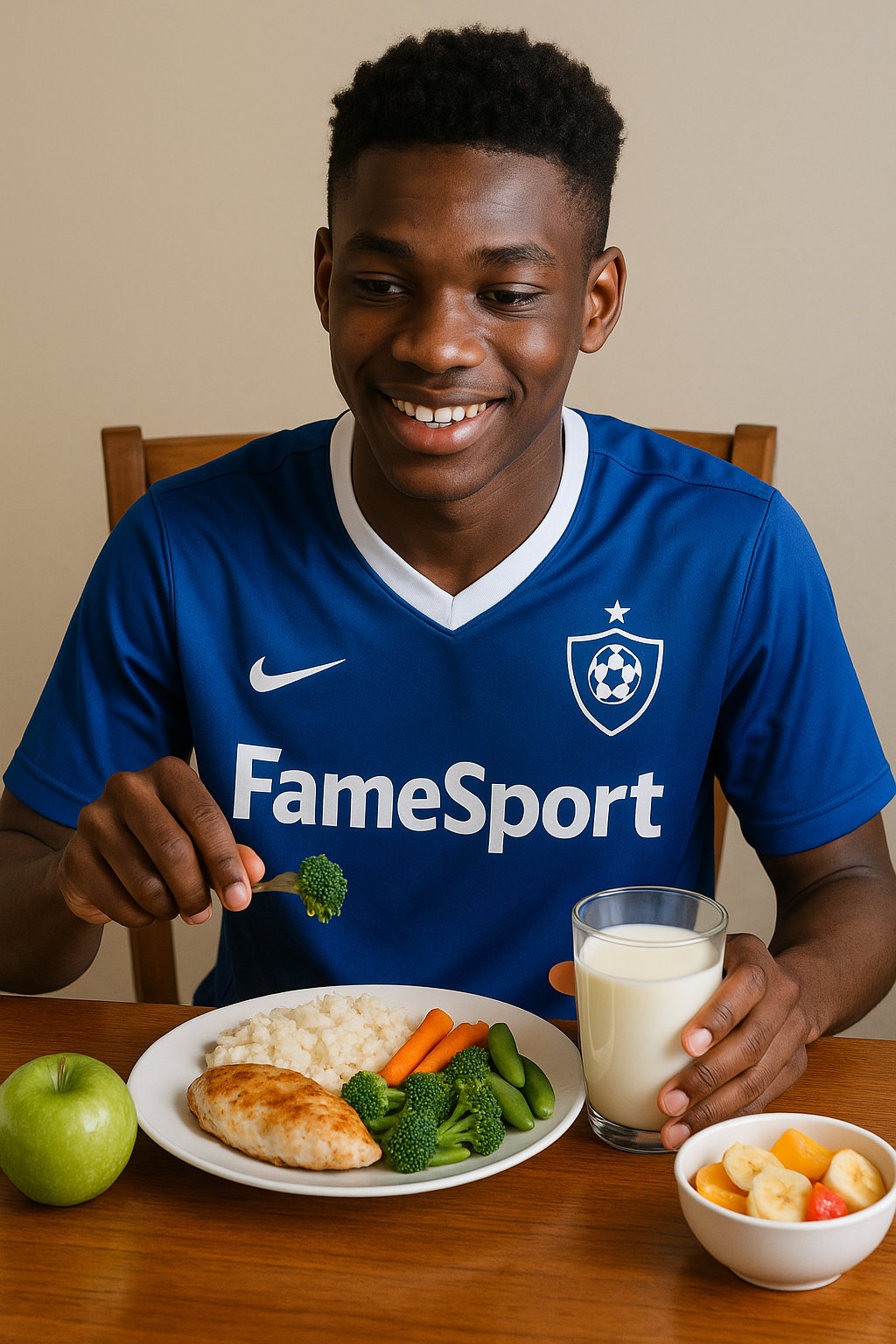
Football is more than just talent and training — it’s also about what you eat.
For every upcoming footballer dreaming of playing at the highest level, good nutrition is the silent weapon that fuels performance, recovery, and long-term success.
At FameSport Football Club, we believe that developing great players starts from understanding how to feed the body for strength, speed, and endurance.
Here’s a simple guide every young footballer should follow to stay match-fit all year round.
1. Start Your Day with a Powerful Breakfast
Your body needs energy to perform, and that starts from the first meal of the day. Skipping breakfast can make you sluggish, less focused, and more prone to fatigue during training.
What to eat:
- Whole grains (oats, brown bread, or pap with milk)
- Eggs for protein
- Fresh fruits like bananas, oranges, or apples
- A glass of milk or fruit smoothie
Avoid: sugary cereals, soda, or fried snacks first thing in the morning.
A strong breakfast sets the tone for a productive training day.
2. Eat for Energy — Carbs Are Your Friend
Carbohydrates are your body’s main fuel source during training and matches. They give you the stamina to keep running, tackling, and performing at your best.
Good sources of energy:
- Rice, pasta, yams, potatoes, and bread
- Fruits like bananas and oranges
- Whole grains such as oats and brown rice
Avoid too many refined carbs (like white bread or sugary snacks) — they give quick energy but crash fast.
Pro tip: Eat a balanced meal about 2–3 hours before a match or training session.
3. Don’t Forget Protein — It Builds Your Muscles
After every training session or match, your muscles need repair. That’s where protein comes in.
Best protein sources:
- Eggs, chicken, fish, beans, lentils, and milk
- Groundnuts and soybeans for affordable options
Try to include protein in every meal. For example, combine rice with beans, or yam with egg. This helps you recover faster and build lean muscle over time.
4. Stay Hydrated — Water Is as Important as Food
Dehydration can make you tired, dizzy, and less focused. During matches or training, you lose water through sweat, so it’s crucial to replace it.
Tips for hydration:
- Drink water regularly — don’t wait until you’re thirsty
- Avoid too many soft drinks or energy drinks; water and natural fruit juices are better
- During matches, take small sips at half-time
A hydrated body performs better, reacts faster, and recovers quickly.
5. Eat After Training — Recovery Matters
Post-training meals are often ignored, but they are essential for recovery. The best time to eat is within 30–60 minutes after training.
Recovery meal ideas:
- Rice and beans with fish
- Bread and boiled eggs
- Milk or smoothie with banana and oats
Combining carbs and protein after training helps rebuild energy and repair muscles faster.
6. Avoid Junk Food and Alcohol
Many young players fall into the trap of eating junk food and drinking soft drinks too often. These slow down your body and reduce your energy levels.
Limit or avoid:
- Fried foods, chips, pastries, and fast food
- Alcohol and sugary drinks
Professional footballers understand that discipline in the kitchen is just as important as discipline on the field.
A footballer’s body is like a car — the better the fuel, the better the performance. Eating right gives you the energy to train harder, recover faster, and stand out during trials or matches.
At FameSport Football Club, we encourage all our young players to take their diet seriously. The right nutrition can be the difference between being a good player and becoming a great one.https://famesportfootballclub.com.ng/